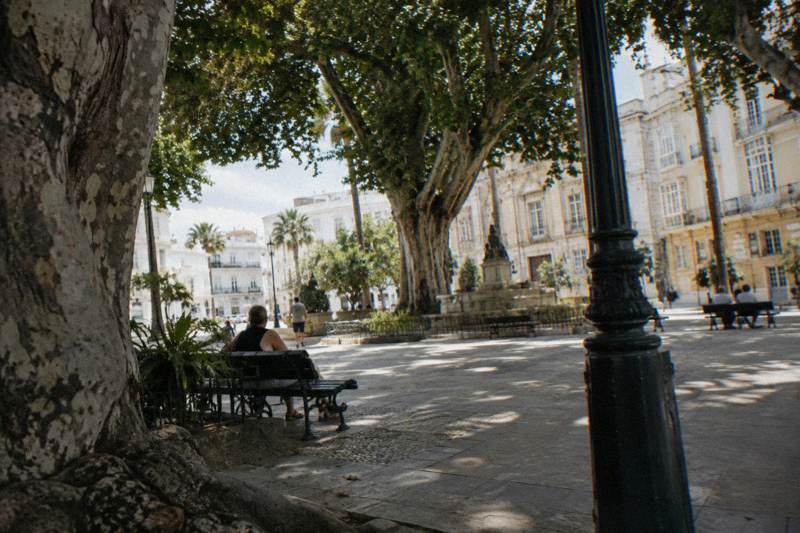
Semana Santa In Cadiz: Free Processions, Dates And What Costs Money
Holy Week processions in Cadiz are free to watch from the street, and the 2027 dates run from Palm Sunday 21 March to Easter Sunday 28 March. Here is what is free, what is paid, and where the schedules live.
In Short
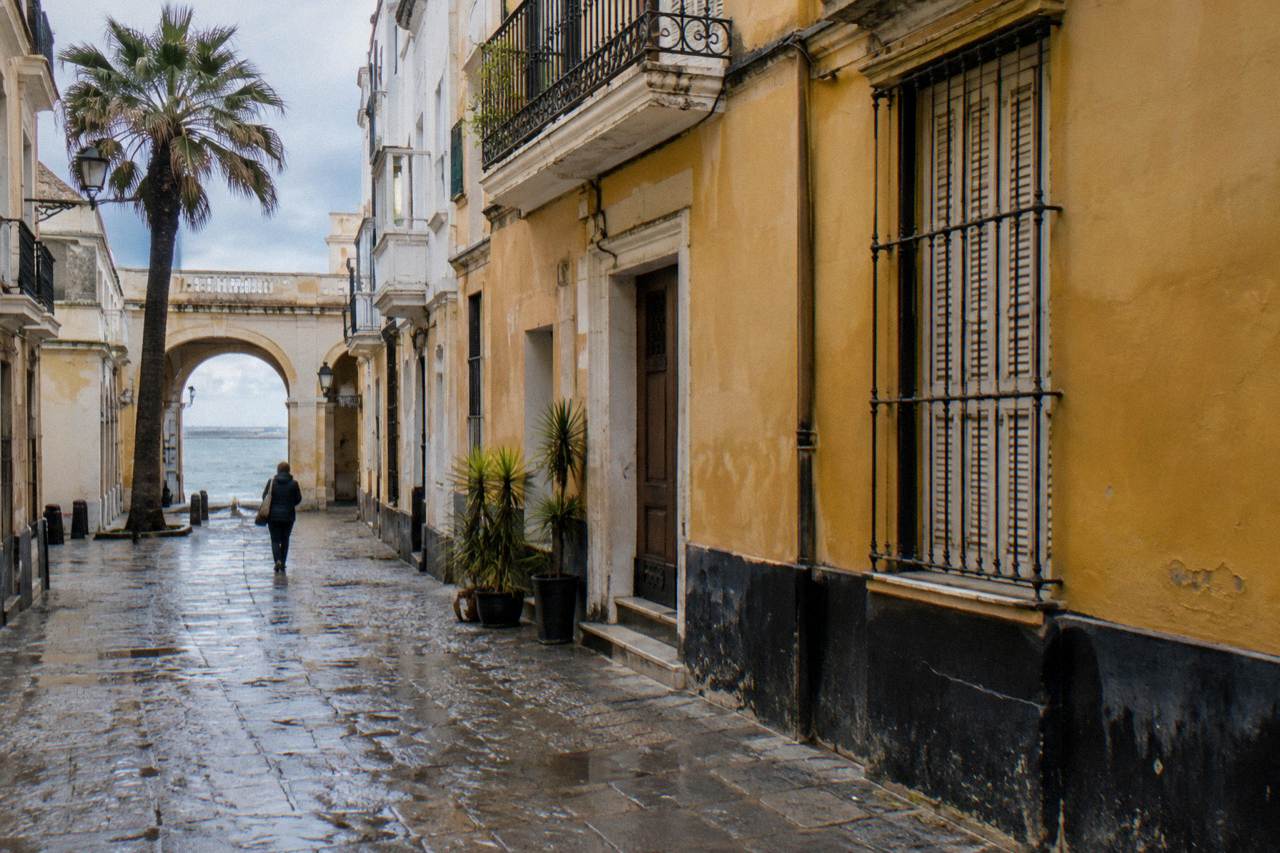
Yes, the Semana Santa processions in Cadiz are free to watch. They pass through public streets, and no ticket, barrier or fee exists for standing along the route. Holy Week 2027 runs from Palm Sunday on 21 March to Easter Sunday on 28 March. Costs only appear if you buy a chair, a balcony seat, food or drinks, none of which the processions themselves require.
Semana Santa turns the streets of Cadiz into an open-air spectacle that costs nothing to watch. Brotherhood processions move through the old town from Palm Sunday to Easter Sunday, and every one of them passes along public ground where standing is free. This guide sets out the 2027 dates, the free-versus-paid split, and where the official schedules are published, so a first Holy Week visit lands on solid information rather than guesswork.
Part of the Free Things To Do In Cadiz guides series.
Quick Facts
| Question | Answer |
|---|---|
| Are the processions free? | Yes, street processions are free to watch |
| 2027 dates | Palm Sunday 21 March to Easter Sunday 28 March |
| What is free | Street processions, public squares, the route side |
| What costs money | Chairs, balcony seats, food and drinks, transport |
| Official schedule | Published by the brotherhoods and the cathedral |
| Free walk in English | Cadizfornia Official Walk on GuruWalk, 2 hours |
| Nearest meeting point | Plaza de San Juan de Dios, 13D |
Are The Semana Santa Processions In Cadiz Free?
Yes, the Semana Santa processions in Cadiz are free to watch. Every procession passes through public streets, and watching from the pavement costs nothing: there is no ticket, no gate and no charge for standing along any route. Money only enters Holy Week through optional extras, such as hired chairs, rented balconies, food and drinks, none of which the processions require.
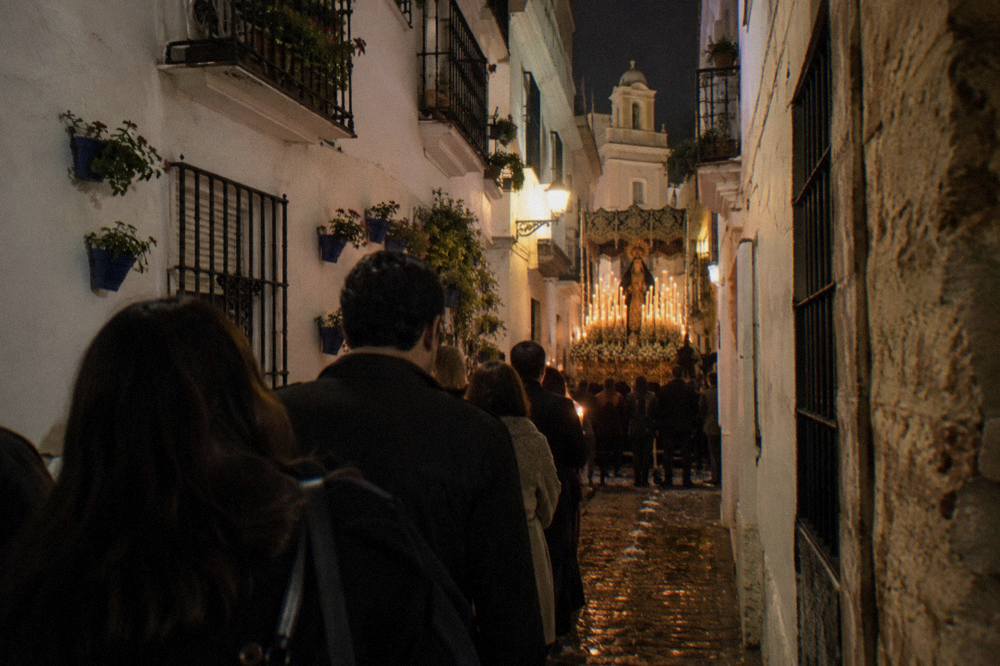
The free side of Holy Week is the street side, and in Cadiz that is the whole spectacle. Brotherhoods, the cofradias, carry their floats, called pasos, from their home churches through the old town and back, and the route is ordinary public ground. Anyone can stand at the edge of the pavement and watch the paso, the penitents, the bands and the candles go past without paying anything. The processions are religious acts, not ticketed performances, and the city does not charge for access to the streets they use.
This is the same free-versus-paid pattern that runs through Cadiz generally. Plaza de la Catedral is a free public square while the cathedral interior is a paid visit at 12 euros general; the Mercado Central is free to enter while food at the stalls is paid; the street side of Carnival is free while the official COAC contest inside the Gran Teatro Falla is ticketed. Holy Week follows the rule exactly: the procession is free, the conveniences around it are not. If you want a seat instead of standing, or a balcony above the route, those are commercial arrangements that have nothing to do with the procession itself.
What the free spectator gets is not a reduced version of the event. The paso, the music, the silence between passages and the crowd atmosphere all happen at street level. Many of the best views in Cadiz come from ordinary corners in the old quarters: the Barrio del Populo, La Vina, Barrio de Santa Maria and the squares along the processional routes are all free public space. The free squares and quarters of Cadiz are the same places the processions use, so knowing the free geography of the city doubles as knowing where to stand.
One caution about respect: these are religious processions, and the crowd behaves accordingly. Silence is expected as a paso passes, and the brotherhoods and the city ask spectators to keep passages clear. None of that costs money; it only costs attention. A visitor who treats the event as a street festival to talk over will stand out, and not in a good way.
For context on how the week sits among Cadiz celebrations, the free Carnival events guide covers the other big street spectacle in the city calendar. Carnival and Holy Week are the two poles of the Cadiz year: one loud and satirical, the other solemn, and both free at street level while their official indoor versions are ticketed.
When Is Semana Santa In Cadiz In 2027?
Semana Santa in Cadiz in 2027 runs from Palm Sunday, 21 March 2027, to Easter Sunday, 28 March 2027. Those two Sundays are the fixed anchors of Holy Week, and the processions take place across the days between them. Beyond those dates, no processional route, timetable or brotherhood schedule is confirmed here, so plan on the dates and check the official sources below.
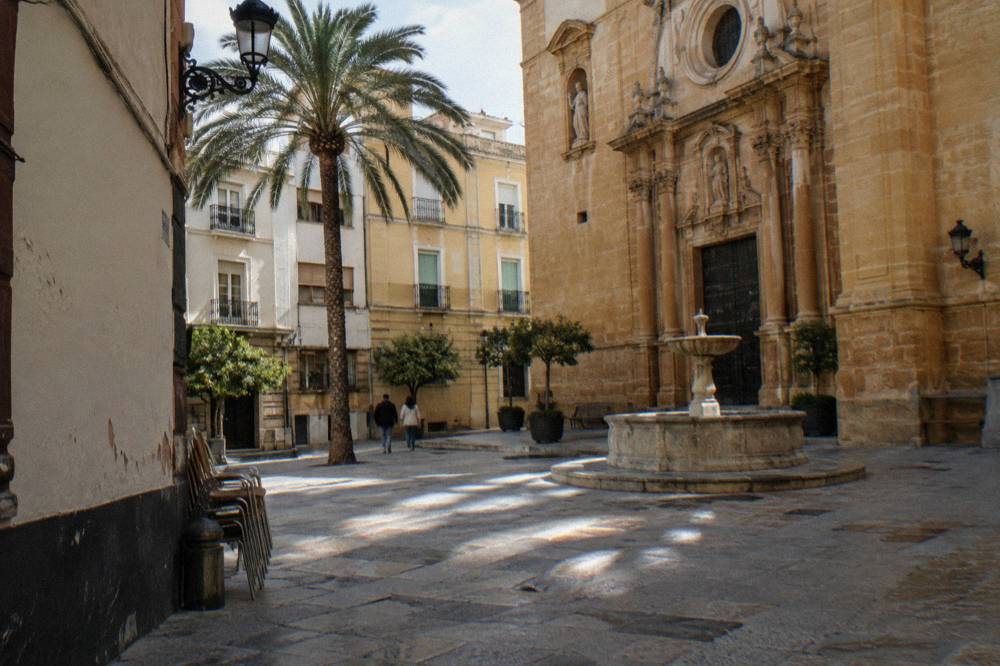
The 2027 calendar is unusually late: Easter Sunday falls on 28 March, which pushes Palm Sunday to 21 March and Holy Week into the second half of March. For Cadiz this matters in practical ways. March evenings are when many processions move, and the light and temperature of late March are milder than an early-April Holy Week. No weather claim can be made here beyond that general point, because no forecast exists for dates months away, but the calendar itself is fixed and reliable.
The exact routes, start times and brotherhood order for the 2027 processions have not been published yet. The cofradias set their routes and departure times each year, coordinated with the cathedral and the city, and the finished programme appears in the official channels shortly before the week itself. Any website printing a full 2027 timetable in November is guessing. The honest planning position is: dates fixed, detail pending.
| Semana Santa 2027 marker | Date |
|---|---|
| Palm Sunday | 21 March 2027 |
| Holy Week processions | Across the days between the two Sundays |
| Easter Sunday | 28 March 2027 |
| Routes and times | Published closer to the week |
| Brotherhood order | Published closer to the week |

Late March in Cadiz also overlaps with everything else the city offers for free, and Holy Week is a good moment to combine the processions with the rest of the free roster. The one day in Cadiz for free itinerary works in that season too, with the caveat that opening hours of municipal sites can shift around public holidays. Easter week itself contains public holidays in Spain, and museum closing days, especially the Monday closures at Junta-run sites, can bite. Check each site's day against the calendar before building a schedule.
If a visit is planned around the processions rather than despite them, the practical shape of the week is this: Palm Sunday opens the week with processions across the city, the middle days carry the heavier evening processions, and the late-week services culminate over the Easter weekend. Which brotherhood walks which night is exactly the detail that lives in the official schedule, covered in a later section, and not in speculation here.
For visitors who prefer the city at its most festive, what to see in Cadiz for free gives the year-round picture, into which Holy Week drops as an eight-day intensification.
Both walks above are free, pay what you want, and run in English and Spanish for 2 hours: the Victoria History And Anecdotes Walk is rated 4.89 out of 5 across 1,364 GuruWalk reviews, and the OWAY Tours Walk is rated 4.66 out of 5 across 270 GuruWalk reviews. Neither is a Holy Week tour, and no route is claimed for either beyond its meeting point, but both meet at Plaza de San Juan de Dios, the square at the heart of the old town where much of the city's public life, Holy Week included, happens around.
What Costs Money During Semana Santa?
The processions cost nothing, but four things around them do: hired chairs along the routes, rented balcony seats, all food and drinks, and transport. The city itself does not sell access to the streets, so every euro spent during Holy Week goes to private sellers or ordinary businesses, not to watch a procession. Budget for the extras only if you want them.
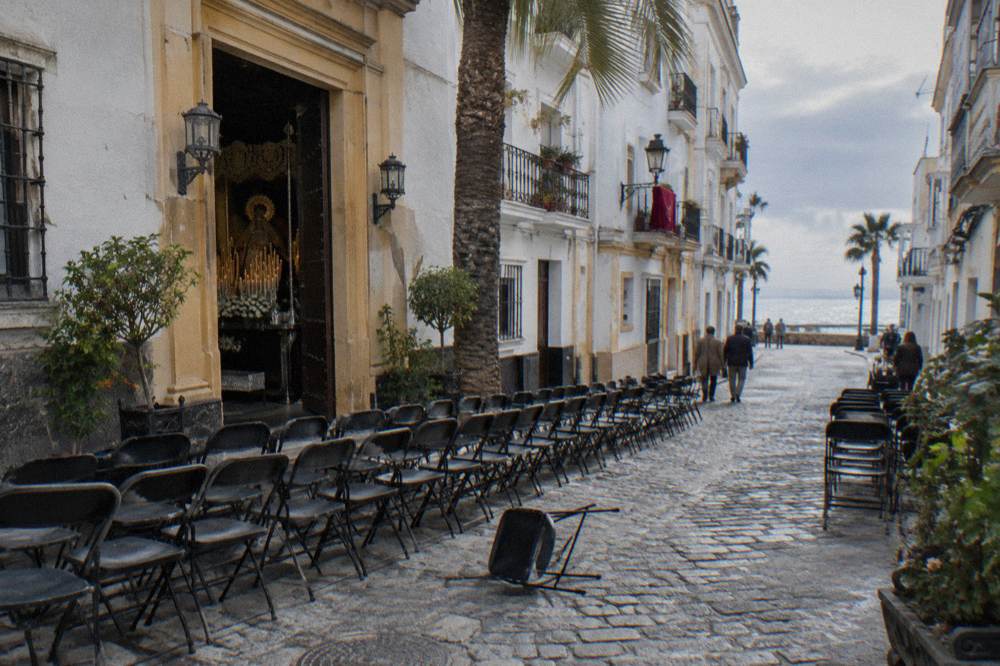
Chairs are the classic Holy Week purchase. Along the main routes, local sellers put out rows of chairs for hire, and the people who sit in them have paid for comfort, not for a view that is otherwise hidden. Standing room along the same streets is free and open to anyone. The same logic applies to balconies: some residents and businesses rent balcony windows overlooking key streets for the evening processions, and those seats can be the most expensive way to watch a free event in Spain. Neither chairs nor balconies are required, and the processions pass everyone the same way. Other pages covering the same trip are gathered on Free Things To Do In Cadiz.
Food and drink are the other unavoidable category, because everything consumed is paid. A coffee at a bar on the route, dinner after a late procession, water through an afternoon wait: all of it is ordinary commerce at ordinary prices. The Central Market free visit guide covers the market side of eating in Cadiz, where entry is free and the stalls are paid, and the same rule holds everywhere during Holy Week. A free walk covers this ground: English-Only Old Town Walk.
| Item during Semana Santa | Free or paid |
|---|---|
| Watching any street procession | Free |
| Standing along the route | Free |
| Public squares the routes pass | Free |
| Hired chairs along routes | Paid |
| Rented balcony seats | Paid |
| All food and drinks | Paid |
| Cathedral interior during the week | Paid visit, 12 euros general |
| Procession route or timetable access | Free, published publicly |
One point worth repeating because it trips people up: the paid parts of the city do not become free for Holy Week. The Catedral de Cadiz remains a paid visit at 12 euros general, with free entry only for children under 12 with an adult, people with over 60 percent disability, and natives or residents of the Cadiz-Ceuta diocese, each with proof. Torre Tavira remains paid at 8 euros general and 6 euros reduced. The processions add a free layer to the city; they do not unlock the paid attractions. Anyone budgeting a Holy Week trip should plan the paid sights separately from the free week itself, and the free versus paid sights comparison breaks the full split down.
Transport during Holy Week is also a paid item, and this page makes no claims about trains, buses or timetables, because none is confirmed here. What can be said is that Cadiz is a compact city where the processional heart of the week, the old town, is walkable end to end on foot, and the free walking geography of the city is covered in the Cadiz old town on foot guide. Where you sleep and how you arrive are the biggest costs of the week, and both sit outside what this site covers.
A final note on the honest framing of the week: Semana Santa is not a tourist product. The brotherhoods fund their processions through their members and donations, and the spectator pays nothing because the spectacle is an act of worship moving through public streets. The commercial ring around it, chairs, balconies, bars, is a private economy that has grown up around a free public event, and a visitor can take or leave every piece of it.
Where Is The Official Schedule Published?
The official Semana Santa schedule in Cadiz is published by the brotherhoods, the cofradias, together with the cathedral, in the run-up to Holy Week each year; local press carries the finished programme once it is released. No 2027 route list, timetable or brotherhood order is confirmed at this stage, so treat anything dated months ahead with suspicion and wait for the official publication.
The reason the schedule appears late is structural. Each cofradia decides its own route and departure time, coordinated with the others, the cathedral and the city, and the agreed programme is published as a whole rather than piecemeal. Local newspapers such as Diario de Cadiz publish the annual Holy Week guide once the programme is fixed, and the paper's guide is the practical working source for many residents: Diario de Cadiz's Holy Week guide is where the finished detail lands. The municipal tourism service, turismo.cadiz.es, carries the city's own event information at turismo.cadiz.es.
What a visitor should extract from the schedule, once it exists, is the small set of facts that actually change a plan: which evenings carry processions, which streets they use, and roughly what time each paso leaves its church. With those three facts, the free spectator can position themselves well without buying anything. Without them, the fallback is simply to be in the old town in the evening during the week, because processions in Cadiz during Holy Week are frequent enough that the streets carry them most nights.
A word on mistrust: every year, websites publish invented Holy Week timetables, recycled from previous years or fabricated outright, because search demand for the schedule is huge and the official detail is late. This page will not do that. The 2027 dates, Palm Sunday 21 March and Easter Sunday 28 March, are the anchors; everything else belongs to the official publication. If a source prints a full brotherhood-by-brotherhood 2027 timetable in winter, check it against the official channels before planning a night around it.
For visitors who want the city explained rather than only the schedule, the Cadizfornia Official Walk is the natural companion. It is a free, pay what you want walk on GuruWalk, run by Cadizfornia, rated 4.66 out of 5 across 5,747 GuruWalk reviews, running 2 hours in English and Spanish from Plaza de San Juan de Dios, 13D. No route is claimed for it here beyond that meeting point, and it is not a Holy Week tour, but it is a free way to learn the city whose streets the processions use. You can See this free tour on GuruWalk.
The walk above is the hero of the site's roster for good reason: 5,747 reviews is a very large pool on GuruWalk, and the 4.66 out of 5 rating covers all languages the walk runs in, English and Spanish alike. It meets at Plaza de San Juan de Dios, 13D, the square that also anchors the city's public life during Holy Week, which makes it an easy fit before the processions begin or on a quiet afternoon between procession days.
The box above links to the same GuruWalk listing: free, pay what you want, nothing to pay up front. The site itself sells nothing and runs none of the walks; its links carry a referral code, as the disclosure explains. Every walk belongs to an independent local guide and every reservation happens on the guide's own page on GuruWalk or, for the site's other walks, on freetour.com. Across the two platforms this site lists 13 free walking tours in Cadiz, though most run in Spanish only, so check the language line before reserving anything.
Mistakes That Trip People Up At Semana Santa In Cadiz
The common mistakes are believing the cathedral becomes free for Holy Week, expecting a published 2027 timetable that does not exist yet, assuming chairs are required to see anything, and showing up with a rigid plan built on invented routes. Each mistake is avoidable with two facts: the processions are free in the street, and the official schedule appears only shortly before the week itself.
The first mistake is assuming the paid sights open up for Holy Week. They do not. The cathedral interior stays a paid visit at 12 euros general, and free entry applies only to children under 12 with an adult, people with over 60 percent disability and diocese natives or residents with proof. Mass attendance is a separate matter from sightseeing. Torre Tavira stays paid at 8 euros general, 6 euros reduced, by advance booking. The Oratorio de San Felipe Neri and the other Cadiz Sacra sites stay paid through the bono at 12 euros general. Holy Week is a free layer on top of the city, not a discount season, and the free museums in Cadiz guide lists what is genuinely free year-round, such as the Museo de las Cortes, free for everyone.
The second mistake is planning around a phantom timetable. Because the 2027 dates are known but the routes and times are not, any detailed itinerary built months ahead rests on nothing. The right approach is to book accommodation around the dates, arrive, and consult the official schedule, published by the brotherhoods and the cathedral and carried by local press, in the final weeks before the week. Flexibility is not a compromise here: it is the plan itself.
The third mistake is paying for what is free. Chairs and balconies are comfort purchases, not access purchases, and the processions pass standing spectators identically. A visitor who budgets for a rented balcony under the impression it is the only good view spends money on something the street gives away. The free squares, the quarters, the seafront: all of it is open during Holy Week, and the processions use exactly that public ground.
The fourth mistake is treating the week as a pure party. Semana Santa in Cadiz is religious first and spectacle second, and the crowd's behaviour follows that: silence as a paso passes, passages kept clear, respect for the brotherhoods at work. Nothing about this costs money or requires insider knowledge. It only requires reading the room, which in Cadiz during Holy Week is a solemn and beautiful one.
The fifth mistake is forgetting that everything else in the city still runs on its own calendar. Museums close on their usual days, some sites have holiday closures around Easter, and a procession can fill a street you planned to cross. Build slack into each day, and let the free spectacle interrupt the plan rather than break it.
The English-Only Old Town Walk above is the freetour.com option for English speakers: rated 9.7 out of 10 across 65 reviews shown on its freetour.com listing, it runs 1 hour 30 minutes in English from Cadiz City Hall, Plaza de San Juan de Dios. The OWAY Tours Walk beside it is the GuruWalk counterpart, rated 4.66 out of 5 across 270 GuruWalk reviews, 2 hours in English and Spanish from Plaza de San Juan de Dios. Like every walk on this site, both are free, pay what you want, and reserved on the platform where they live, GuruWalk and freetour.com respectively.
Common Questions About Semana Santa In Cadiz
Are The Semana Santa Processions In Cadiz Free To Watch?
Yes. Every procession passes through public streets and watching from the pavement costs nothing. There is no ticket, barrier or fee for standing along any route. Only optional extras such as hired chairs, rented balconies, food and drinks cost money, and none of them is required to see a procession.
When Is Semana Santa In Cadiz In 2027?
Semana Santa 2027 in Cadiz runs from Palm Sunday, 21 March 2027, to Easter Sunday, 28 March 2027. Those dates are the fixed anchors of the week. Specific routes, departure times and the brotherhood schedule are published by the cofradias and the cathedral closer to the week itself.
Where Is The Official Semana Santa Schedule Published?
The brotherhoods, the cofradias, publish the programme together with the cathedral, and local press such as Diario de Cadiz carries the finished Holy Week guide once it is released. The municipal tourism service at turismo.cadiz.es carries the city's event information. No full 2027 timetable is confirmed at this stage.
Do I Need To Buy A Chair Or Balcony Seat?
No. Chairs along the routes and rented balcony windows are private comfort purchases, not access requirements. The processions pass standing spectators exactly the same way, and the streets they use are free public ground. Anyone can watch for nothing from the pavement.
Is The Cathedral Free During Holy Week?
No. The cathedral interior remains a paid visit at 12 euros general. Free entry applies only to children under 12 with an adult, people with over 60 percent disability, and natives or residents of the Cadiz-Ceuta diocese, each with proof. Mass attendance is separate from sightseeing. Plaza de la Catedral itself is free.
Are There Free Walking Tours In Cadiz During Holy Week?
Yes, this site lists 13 free walking tours across GuruWalk and freetour.com, all free, pay what you want. The Cadizfornia Official Walk on GuruWalk runs in English and Spanish, 2 hours from Plaza de San Juan de Dios, 13D, rated 4.66 out of 5 across 5,747 GuruWalk reviews. Most other walks run in Spanish only, so check each listing's language line.