Is The Oratorio De San Felipe Neri Free?
No, the Oratorio de San Felipe Neri in Cadiz is not free: entry is ticketed through the Cadiz Sacra bono. Here is what it costs, who gets in free, and what is free nearby.
In Short
No, the Oratorio de San Felipe Neri in Cadiz is not free. Entry is paid and ticketed through the Cadiz Sacra bono, a 48-hour pass that costs 12 euros general, 10 euros reduced and 8 euros for groups. The only visitors who enter without paying are people with over 60 percent disability. Planning is simplest around the bono: 12 euros general, 10 euros reduced, 8 euros for groups.
This question sits inside the Free Versus Paid Cadiz Sights guide.
Quick Facts
| Question | Answer |
|---|---|
| Is the Oratorio de San Felipe Neri free? | No, entry is paid through the Cadiz Sacra bono |
| Bono prices | 12 euros general, 10 euros reduced, 8 euros groups |
| Who enters free | People with over 60 percent disability |
| Single-site ticket | Not published, only the bono prices are confirmed |
| What the bono covers | Oratorio de San Felipe Neri, Santa Cueva, Hospital de Mujeres (Capilla del Populo on Saturdays) |
| Free nearby | Plaza de San Antonio, Muralla de San Carlos, Museo de las Cortes de Cadiz, Iglesia de Santa Cruz |
Is The Oratorio De San Felipe Neri Free?
No, the Oratorio de San Felipe Neri is not free, and no free day or free window is published for it. It is a church-run site ticketed through the Cadiz Sacra network, and its confirmed prices are the bono figures: 12 euros general, 10 euros reduced and 8 euros for groups for a 48-hour pass. The only free category is people with over 60 percent disability.
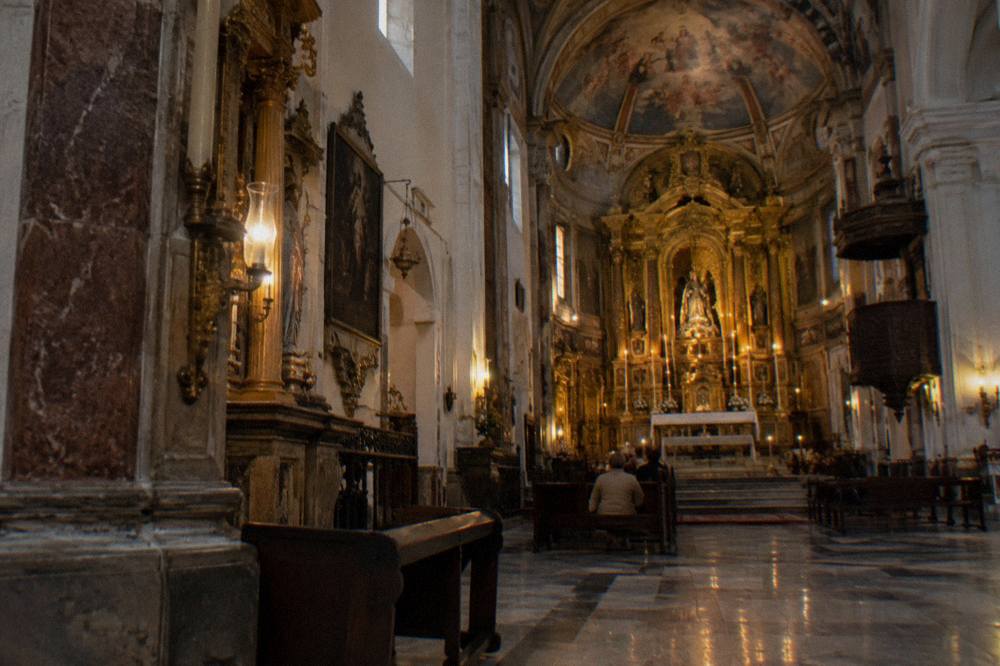
The oratorio sits in the heart of the old town, and it carries real weight in the city's history: this is the church where the Cortes met, the parliament-in-exile that drew up the Constitution of 1812, the text Cadiz still calls La Pepa. That history is part of why the building is run as a visited site rather than an open parish church. The diocese and the Cadiz Sacra network handle ticketing, and the official prices page lists only the bono, which is the practical answer to what a visit costs.
The important planning point is that the bono is not a single-site ticket. It is a 48-hour pass covering the Oratorio de San Felipe Neri, the Oratorio de la Santa Cueva, and the Hospital de Mujeres, with the Capilla del Populo taking the Hospital de Mujeres slot on Saturdays. So the honest comparison is not "12 euros for one church" but "12 euros for several Cadiz Sacra sites across two days." If you only want the oratorio and nothing else, there is no confirmed cheaper way in, because no single-site price is published on the official page.
Anyone who tells you the oratorio is free is mixing it up with a different record. The free museum nearby is the Museo de las Cortes de Cadiz, the municipal museum a few streets away, which is free for everyone and covers much of the same La Pepa story with models, prints and period pieces. The oratorio itself is the paid half of that pair, the same way the Catedral de Cadiz interior is paid while Plaza de la Catedral outside it is free. Cadiz splits cleanly like this all over the old town, and the oratorio is one of the clearest cases.
The official source for every figure above is the Cadiz Sacra prices page at cadizsacra.es/precios, which lists the 12, 10 and 8 euro bono lines and the over-60-percent-disability exemption. If you are building a budget, plan on the bono, check that page before you go for any change, and expect to show proof for the free or reduced categories. The reduced and group rates are the bono's own lines, and the page does not spell out every qualifying condition for them, so a family or student question is best asked at the ticket point itself.
If the paid side of the old town is not what you came for, the free walks are the other main way in. Cadiz has 13 free walking tours listed across GuruWalk and freetour.com, all of them free, pay what you want, and the bulk of them meet at Plaza de San Juan de Dios, a short old-town stroll from the oratorio's square. The most walked of them is the Cadizfornia Official Walk on GuruWalk, rated 4.66 out of 5 across 5,747 GuruWalk reviews, a two-hour walk in English and Spanish from Plaza de San Juan de Dios, 13D. It costs nothing to reserve and nothing to take.
Who Gets In Without Paying?
Only one published category enters the Oratorio de San Felipe Neri without paying: people with over 60 percent disability. That exemption comes from the official Cadiz Sacra prices page, the same source as the bono figures, and it applies across the Cadiz Sacra sites rather than to the oratorio alone. There is no free first Sunday, no free evening window and no residents' free rule for this site, unlike some other Cadiz institutions.
That last point matters because Cadiz conditions visitors to expect free-entry rules. The Museo de Cadiz is free for European Union citizens with ID. The Catedral de Cadiz lets in under-12s, people with over 60 percent disability, and natives or residents of the Cadiz-Ceuta diocese with proof. The Oratorio de San Felipe Neri has no such broad rule on its official page: the over-60-percent exemption is the only free line, and it is the same one the Cadiz Sacra network applies to the Santa Cueva, the Hospital de Mujeres and the Capilla del Populo.
Proof is the practical requirement. The exemption is written as a disability category, so carry the documentation that establishes it, the same way EU citizens carry ID for the Museo de Cadiz. The Cadiz Sacra page does not describe a separate booking lane for exempt visitors, so the simple approach is to raise it at the ticket point. For everyone else, the bono is the entry route, and its 48-hour validity is what shapes the visit: you are buying a two-day window, not a one-hour ticket.
It is worth being precise about what "reduced" means here, because the bono lists a 10 euro reduced line without publishing its qualifying conditions on the page read. Students, seniors and groups each have their own rules at many Cadiz sites, but for this one the only confirmed conditions are the general, reduced and group price lines plus the disability exemption. Anything finer than that is a question for the ticket point, not something to budget on. The same caution applies to the single-site price: no official figure is published for the Oratorio de San Felipe Neri on its own.
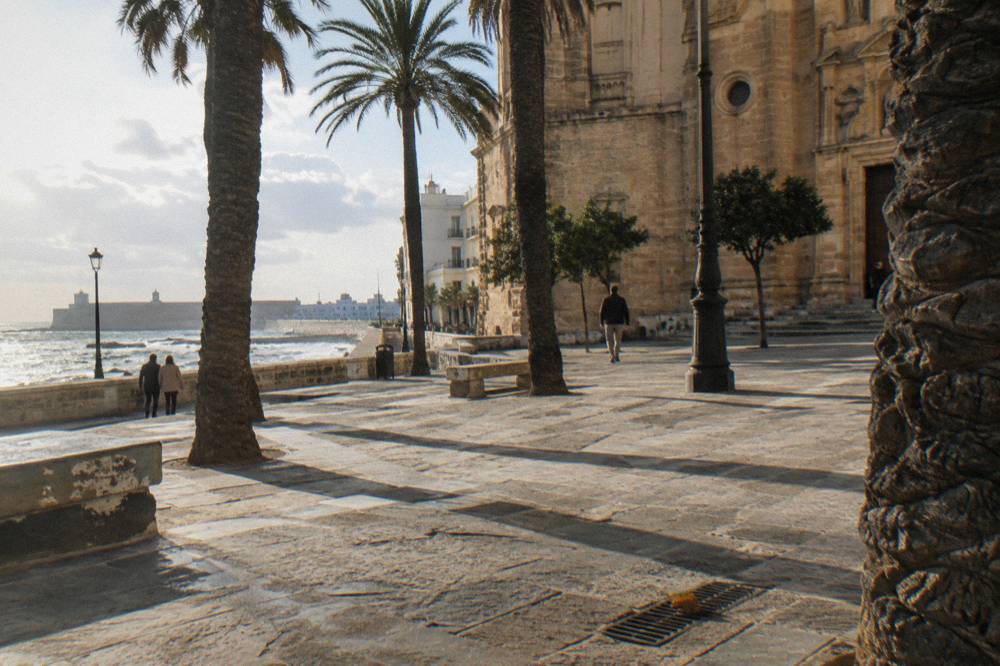
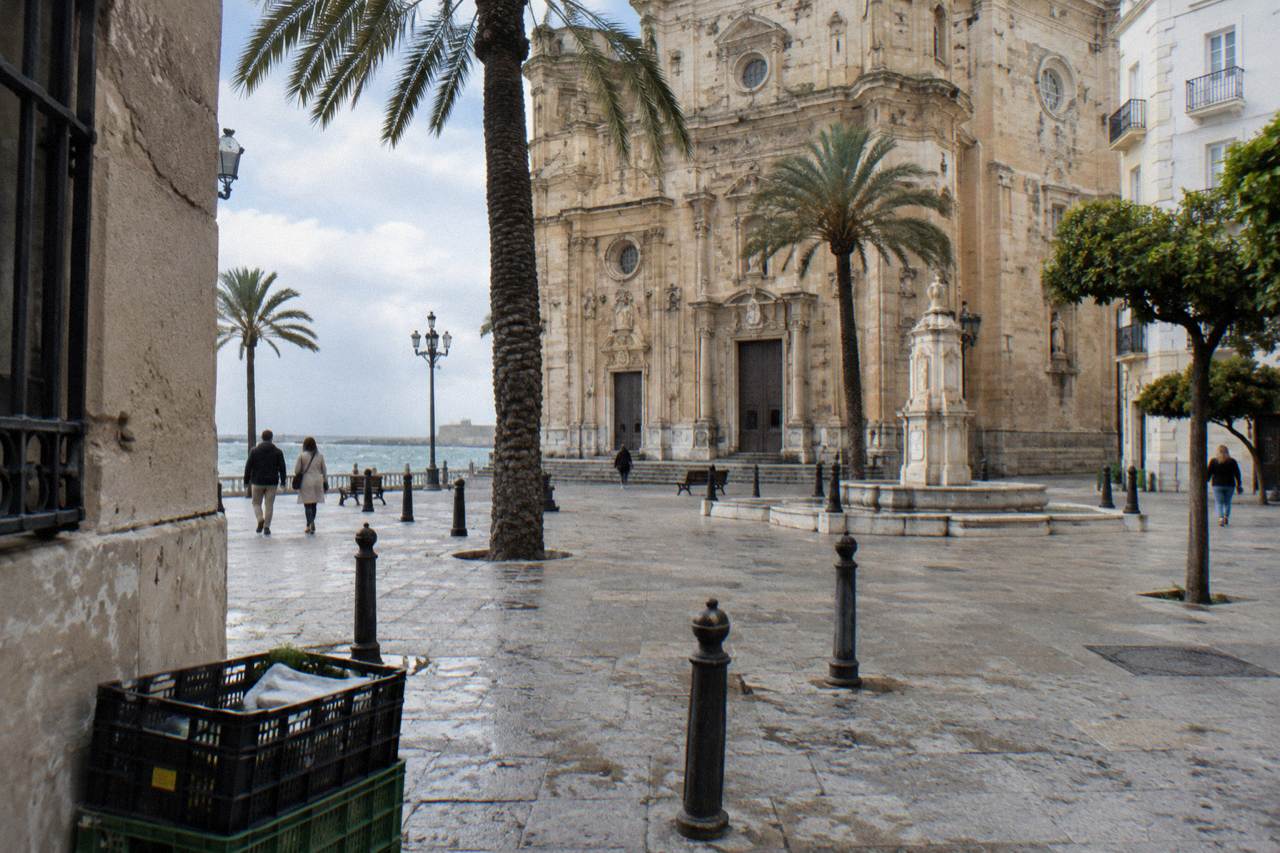
One free way to experience the building without a ticket is simply to stand in its square. Plaza de San Antonio is an open public space, free at all hours, and the oratorio's exterior is part of what the square shows you, alongside the San Antonio church frontage. You will not see the interior or the Cortes memorials from outside, but the plaza itself is one of the old town's pleasant free stops, and it costs nothing to read the building from there. Walking the surrounding quarter is free too, the same as everywhere in the free old town on foot.
What Is The Cadiz Sacra Bono?
The Cadiz Sacra bono is a 48-hour pass that is the only confirmed way to buy entry to the Oratorio de San Felipe Neri: 12 euros general, 10 euros reduced, 8 euros for groups. It also covers the Oratorio de la Santa Cueva, the Hospital de Mujeres on weekdays and the Capilla del Populo on Saturdays. Every site in the network is paid, and only the over-60-percent-disability exemption crosses all of them.
The network exists because Cadiz's religious-heritage sites are run by the church, not the council, and the bono bundles four of them into one ticketed circuit. The Hospital de Mujeres, a baroque building with a Murillo connection in its chapel, is open Monday to Friday 10:30 to 16:00 and closed on holidays. On Saturdays the Capilla del Populo takes its place in the bono, open 10:00 to 14:00 and closed on holidays. The Santa Cueva, with its famous Goya frescoes in the upper oratory, is the third bono site and is paid on the same terms. Other pages covering the same trip are gathered on Free Things To Do In Cadiz.
The 48-hour validity is the strategic detail. If you buy the bono on a Friday afternoon, you can spread the four sites across Friday, Saturday and Sunday morning rather than racing them in one day, and the Saturday switch from Hospital de Mujeres to Capilla del Populo means the pass keeps working across the weekend. There is no published discount for taking only part of the circuit, and no published single-site price for any of the four, so the bono is the planning figure whether you visit one site or all of them.
| Cadiz Sacra site | Paid or free | Price as published | Hours to plan around |
|---|---|---|---|
| Oratorio de San Felipe Neri | Paid | Bono 12 / 10 / 8 euros | In the old town by Plaza de San Antonio |
| Oratorio de la Santa Cueva | Paid | Bono 12 / 10 / 8 euros | Bono site, own visiting hours |
| Hospital de Mujeres | Paid | Bono 12 / 10 / 8 euros | Mon-Fri 10:30-16:00, closed holidays |
| Capilla del Populo | Paid | Bono 12 / 10 / 8 euros | Sat 10:00-14:00, replaces Hospital de Mujeres |
Free categories across the whole network are the over-60-percent-disability exemption and nothing else, as the official prices page states. That page, the Cadiz Sacra price list, is the source for every figure in the table above, and it is the page to check before you go, since church-run ticketing can change seasonally. The bono is sold through Cadiz Sacra, and entry to the Oratorio de San Felipe Neri is paid rather than free: 12 euros general, 10 reduced, 8 for groups, so you can budget for the visit.
What Is Free Near The Oratorio?
Plenty is free within the old town around the Oratorio de San Felipe Neri: Plaza de San Antonio itself, the Muralla de San Carlos beside Plaza de Espana, the free Museo de las Cortes de Cadiz, the Iglesia de Santa Cruz, and the whole walkable quarter of squares from Plaza de la Mina to Plaza de Candelaria. The oratorio is the paid exception in a mostly free neighbourhood.
Start with the museum that answers the same historical question for nothing. The Museo de las Cortes de Cadiz is a municipal museum, free for everyone, open Monday 09:00 to 14:30, Tuesday to Friday 09:00 to 18:00, and Saturday and holidays 09:30 to 14:00, with last entry 15 minutes before closing. Its collections cover the Cortes and the Constitution of 1812 era, so if your interest in the oratorio is the La Pepa story, this free museum delivers a large part of it. The paid oratorio gives you the room where the Cortes actually met; the free museum gives you the objects and prints. Many visitors will want both, but only one of them costs money.
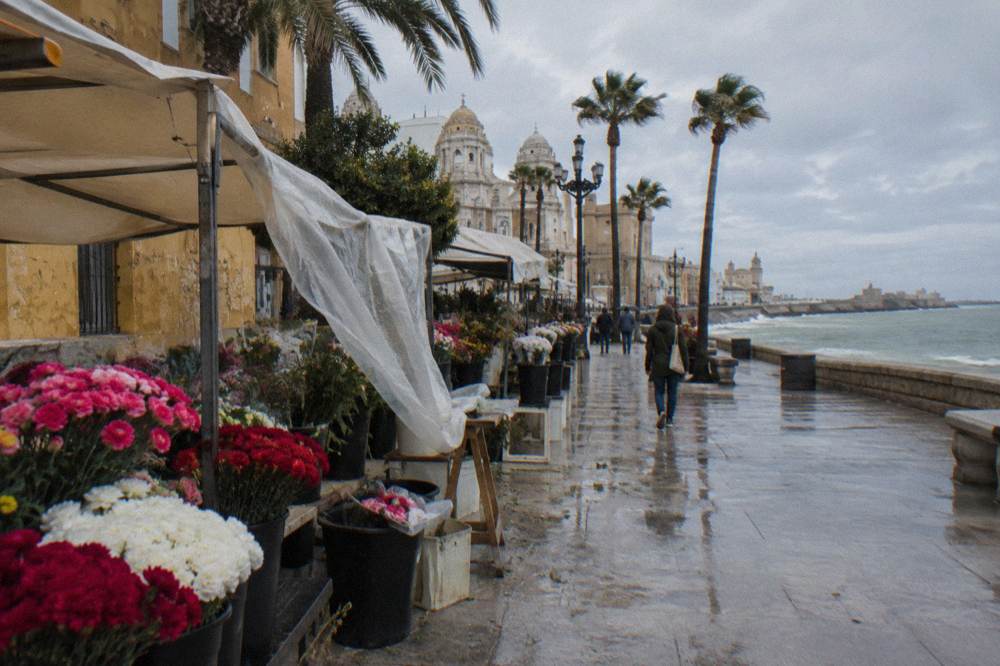
Then work the squares, because they are all open public space and all free at any hour. Plaza de San Antonio holds the oratorio and the San Antonio church. Plaza de la Mina sits outside the Museo de Cadiz, which is itself free for EU citizens with ID and 1.50 euros for everyone else, open Tuesday to Saturday 09:00 to 21:00 and Sunday and holidays 09:00 to 15:00, closed Mondays. Plaza de Candelaria, Plaza de las Flores with its flower stalls beside the Mercado Central, and the Monumento a las Cortes in Plaza de Espana complete a free walking loop through the district, with the Muralla de San Carlos, an open stretch of the city wall beside Plaza de Espana, free to view at any time.
The Mercado Central is free to walk in, open Monday to Saturday 09:00 to 15:00, with food and drink at the stalls paid, and it pairs naturally with Plaza de las Flores next door. Further afield but still free, the Teatro Romano is free for everyone, open in winter Monday to Saturday 10:00 to 16:30 and Sunday 10:00 to 14:00, closed the first Monday of each month and on 1 and 6 January, 1 May, 15 August, 24, 25 and 31 December. The municipal tourism office's own pages at turismo.cadiz.es carry the current listing for each of these, and they are the check-before-you-go source for hours.
If you would rather have a guide frame all of this, the free walking tours cover the same old-town ground for nothing up front. The Cadizfornia Official Walk meets at Plaza de San Juan de Dios, 13D, runs two hours in English and Spanish, and is free, pay what you want on GuruWalk. The Victoria History And Anecdotes Walk, also on GuruWalk from Plaza de San Juan de Dios, 5, runs two hours in English and Spanish and is rated 4.89 out of 5 across 1,364 GuruWalk reviews. Spanish speakers have further options on both GuruWalk and freetour.com, including walks focused on the 1812 story; those run in Spanish only. A fuller rundown of the free-versus-paid splits across the city is in what to see in Cadiz for free, and the question of how these walks are funded is covered in are free walking tours in Cadiz really free.
Mistakes That Trip People Up At The Oratorio De San Felipe Neri
The common mistakes are assuming the oratorio is free because other Cadiz sites are, planning around a single-site ticket when entry runs through the Cadiz Sacra bono, mixing the oratorio up with the free Museo de las Cortes, and buying the bono without realising the Hospital de Mujeres and Capilla del Populo swap on Saturdays. Each of these comes from half-remembering a different site's rule and applying it here.
The first mistake is the generalisation. Cadiz has enough genuinely free heritage, the Teatro Romano, the Museo de las Cortes, the Castillo de San Sebastian with its weather-permitting causeway, that visitors start assuming everything old is free. The oratorio is not: it is church-run and bono-ticketed, full stop, and no free window is published for it. The second is budgeting on a single-site price that circulates online, because none is published officially. That number does not appear on the official Cadiz Sacra page, and treating it as fact is how a visit starts with an argument at the ticket point. Plan on the bono.
The third mistake is the museum mix-up. The Museo de las Cortes de Cadiz is free and covers the same 1812 period; the Oratorio de San Felipe Neri is the paid site where the Cortes met. They are separate institutions with separate operators, and conflating them produces both wrong budgets and disappointment. The fourth is bono timing: if your 48 hours start on a Saturday, the Hospital de Mujeres is not in play, the Capilla del Populo is, and if a public holiday falls in your window, both the hospital and the chapel close. Check the day of the week and the calendar before you buy, not after.
Common Questions On This Topic
Is The Oratorio De San Felipe Neri Free?
No. Entry is paid through the Cadiz Sacra bono: 12 euros general, 10 euros reduced, 8 euros for groups, valid 48 hours across the network's sites. The only free category is people with over 60 percent disability. No free day or window is published for this site.
Who Gets Into The Oratorio De San Felipe Neri Without Paying?
People with over 60 percent disability, per the official Cadiz Sacra prices page, with proof expected at the ticket point. That is the only published free category. Unlike the Catedral de Cadiz, there is no under-12 rule and no diocese-residents rule listed for the oratorio.
How Much Is A Single Ticket To The Oratorio?
No single-site price appears on the Cadiz Sacra page for the Oratorio de San Felipe Neri. No single-site price is published officially. The confirmed way in is the Cadiz Sacra bono at 12, 10 or 8 euros, which also covers the other bono sites.
What Does The Cadiz Sacra Bono Cover?
A 48-hour pass covering the Oratorio de San Felipe Neri, the Oratorio de la Santa Cueva, and the Hospital de Mujeres, with the Capilla del Populo replacing the Hospital de Mujeres on Saturdays. The Hospital de Mujeres is open Monday to Friday 10:30 to 16:00, closed holidays; the Capilla del Populo on Saturdays 10:00 to 14:00.
What Free Sights Are Near The Oratorio?
Plaza de San Antonio, Plaza de la Mina, Plaza de Candelaria, Plaza de las Flores and the Muralla de San Carlos are all free public spaces. The Museo de las Cortes de Cadiz is free for everyone, and the Iglesia de Santa Cruz is listed as free. The Mercado Central is free to enter, with food and drink paid.
Is The Museo De Las Cortes The Same As The Oratorio?
No. The Museo de las Cortes de Cadiz is a free municipal museum covering the 1812 period. The Oratorio de San Felipe Neri is the paid, church-run site where the Cortes met, ticketed through Cadiz Sacra. They are different operators with different entry rules, and only the museum is free.